
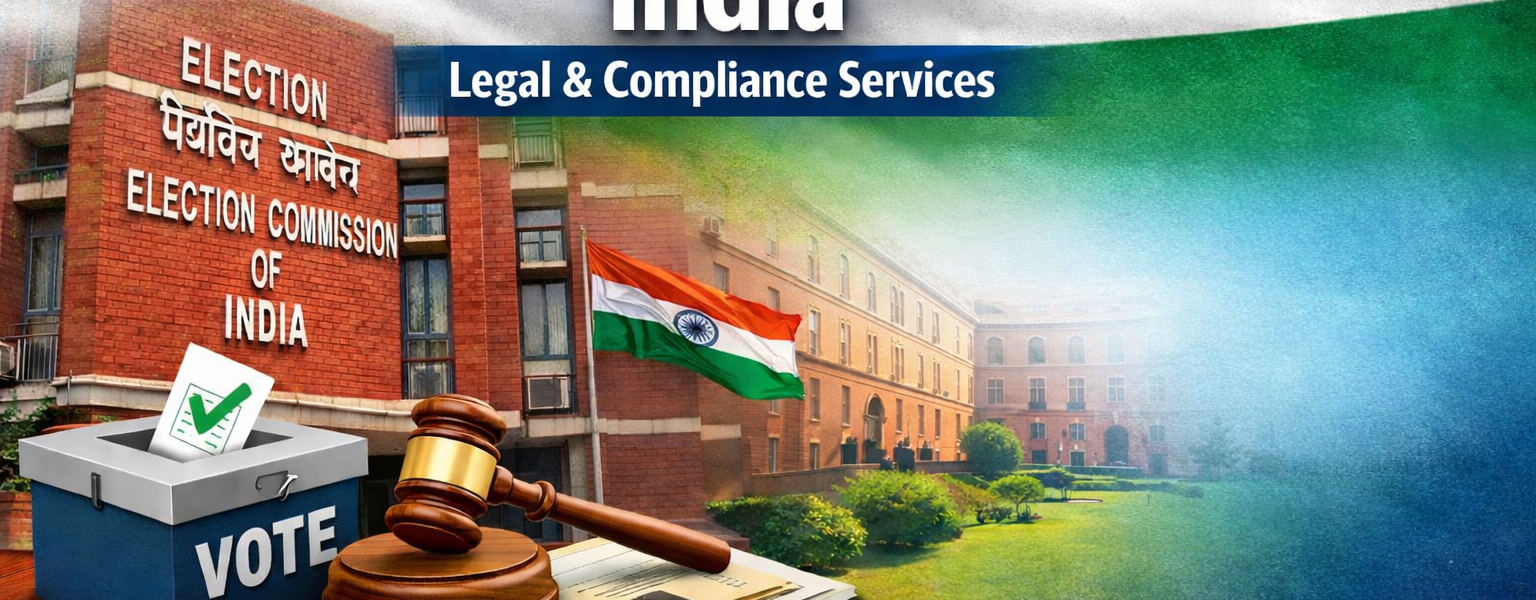
Introduction
political party registration india | Democracy in India allows citizens to form political parties and participate directly in governance. However, forming a political party is not just a political or ideological step—it is a serious legal process governed by strict statutory rules. Any mistake in documentation, disclosure, or compliance can result in rejection, delays, or even deregistration.
That is why political party registration in India increasingly requires professional legal and compliance expertise, especially when long-term annual compliance with the Election Commission of India (ECI) is involved.
This detailed guide explains:
- How political party registration in India works
- Legal provisions under Indian law
- Mandatory annual compliance requirements
- Risks of non-compliance
- How professional advisory ensures sustainability
This article is designed for founders, activists, social leaders, NGOs, and political professionals who want clarity, legality, and credibility from day one.
What Is Political Party Registration in India?
Political party registration is the formal legal recognition granted by the Election Commission of India (ECI) to an association of citizens that intends to function as a political party.
Once registered, a political party gains:
- Legal identity under Indian election law
- Eligibility to contest elections
- Lawful access to political funding
- Recognition in official electoral records
- Compliance-based legitimacy
Without proper registration, a group cannot function effectively within India’s electoral system.
Governing Law: Representation of the People Act, 1951
Political party registration in India is governed by Section 29A of the Representation of the People Act, 1951.
Under this provision:
- Any association of Indian citizens may apply for registration
- The party must pledge allegiance to the Constitution of India
- Democratic functioning must be built into the party structure
- Financial transparency is mandatory
The Election Commission carefully scrutinizes every application to ensure compliance with democratic principles.
Why Political Party Registration Is Not a DIY Process
Many applicants assume political party registration is similar to NGO or society registration. This is a costly misunderstanding.
Common reasons applications fail:
- Improperly drafted party constitution
- Absence of internal democracy clauses
- Incorrect affidavits
- Non-compliance with ECI formats
- Missed deadlines or procedural lapses
Because the ECI follows a quasi-judicial process, professional handling is essential.
Role of a Professional Political Party Registration Consultant
A professional advisor does much more than file forms. The role includes:
- Legal structuring of the party
- Drafting constitution aligned with ECI expectations
- Managing statutory declarations
- Responding to ECI objections or notices
- Designing a long-term compliance roadmap
This ensures the party is not just registered—but legally sustainable.
Manjeet Singh Sandhu – Political Party Registration & Compliance Expert
For individuals and groups seeking political party registration in India with complete annual compliance, professional guidance is provided by:
Manjeet Singh Sandhu
Founder & Consultant – Loansandfinance.in
📞 Call / WhatsApp: 8700237256 | 9811993953
📧 Email: manjeetsinghsandhu@zohomail.com
🌐 Platform: Loansandfinance.in
Manjeet Singh Sandhu provides end-to-end advisory services covering:
- Political party registration under Section 29A, RPA 1951
- Drafting legally compliant political party constitutions
- Election Commission of India filings and follow-ups
- Annual statutory compliance and audit coordination
- Regulatory advisory for long-term political operations
Services are offered on a Pan-India basis, ensuring confidentiality, accuracy, and compliance.
Step-by-Step Process of Political Party Registration in India
1. Strategic Legal Planning
Before filing, the party’s:
- Ideology
- Objectives
- Governance structure
are aligned with constitutional values and ECI norms.
2. Drafting the Political Party Constitution
The constitution must clearly define:
- Membership rules
- Internal elections
- Appointment and removal of office bearers
- Financial discipline
- Disciplinary mechanisms
This document determines approval or rejection.
3. Preparation of Affidavits & Declarations
Affidavits from key office bearers confirm:
- Indian citizenship
- Allegiance to the Constitution
- Non-association with banned organizations
Accuracy is critical.
4. Filing with the Election Commission of India
The complete application is filed with:
- Supporting documents
- Proof of party office address
- Prescribed declarations
Post-filing, the ECI may seek clarifications or conduct hearings.
5. Approval & Registration Certificate
Once satisfied, the ECI grants registration, and the party becomes a legally recognized political entity.
Understanding Annual Compliance for Political Parties
Registration is only the beginning. Annual compliance is mandatory, regardless of whether the party contests elections.
Failure to comply can lead to:
- Loss of tax benefits
- Public disclosure as a defaulting party
- Deregistration by the ECI
Mandatory Annual Compliance Requirements
1. Annual Audited Financial Statements
Every political party must submit:
- Income & expenditure statement
- Balance sheet
- Audit report
These reflect transparency and accountability.
2. Donation & Contribution Disclosure
Parties must disclose:
- Contributions above prescribed limits
- Donor details
- Mode of receipt
Anonymous or unlawful funding is strictly prohibited.
3. Income Tax Compliance
Political parties must:
- File Income Tax Returns
- Maintain books of accounts
- Claim exemptions lawfully
Non-compliance attracts penalties.
4. Intimation of Changes to ECI
Any change in:
- Office bearers
- Party address
- Constitution amendments
must be promptly reported to the ECI.
5. Internal Democracy & Elections
Political parties must:
- Conduct internal elections
- Follow their constitution
- Maintain election records
This is a core compliance requirement.
Why Annual Compliance Is Increasingly Strict
In recent years, authorities have intensified scrutiny due to:
- Political funding transparency
- Electoral integrity concerns
- Public accountability
Hundreds of political parties have faced action for non-compliance, highlighting the importance of professional oversight.
How Professional Compliance Management Helps
With expert support from Manjeet Singh Sandhu (Loansandfinance.in), political parties benefit from:
- Compliance calendars
- Audit coordination
- Accurate disclosures
- Timely filings
- Risk mitigation
This allows party leaders to focus on ideology and outreach—not paperwork.
Registration vs Recognition: A Common Confusion
| Aspect | Registration | Recognition |
|---|---|---|
| Legal status | Yes | Yes |
| Authority | ECI | ECI |
| Election symbol | Temporary | Reserved |
| Vote share | Not required | Required |
| Mandatory | Yes | Performance-based |
Professional advisors handle registration and compliance, while recognition depends on electoral success.
Cost of Political Party Registration & Compliance
Indicative professional charges vary based on scope:
- Registration services
- Constitution drafting
- Annual compliance packages
- Audit coordination
A transparent engagement ensures clarity and accountability.
Common Mistakes That Lead to Rejection or Deregistration
- Copy-paste constitutions
- Ignoring annual filings
- Not disclosing donations
- Missing internal elections
- Delayed ECI communication
These risks are eliminated through professional management.
Future of Political Party Compliance in India
India’s electoral system is moving toward:
- Digital disclosures
- Greater transparency
- Stronger enforcement
Political parties must adapt by adopting professional legal and compliance frameworks.
Conclusion
Political party registration in India is a legal responsibility, not a formality. From drafting the constitution to maintaining annual compliance, every step must align with Election Commission of India regulations.
With expert guidance from Manjeet Singh Sandhu of Loansandfinance.in, political parties can ensure:
- Smooth registration
- Ongoing compliance
- Legal credibility
- Long-term sustainability
Professional compliance is no longer optional—it is essential for serious political participation.
📞 Contact for Political Party Registration India
Manjeet Singh Sandhu
Founder – Loansandfinance.in
📞 Call / WhatsApp: 8700237256 | 9811993953
📧 Email: manjeetsinghsandhu@zohomail.com
🌐 Pan-India Professional Services
❓ SEO FAQs
1. What is political party registration in India?
Political party registration in India is the legal process of registering a party with the Election Commission of India under Section 29A of the Representation of the People Act, 1951.
2. Is political party registration mandatory in India?
Registration is not mandatory to exist, but it is essential to contest elections, receive donations legally, and claim tax benefits.
3. Who can apply for political party registration in India?
Any association or body of Indian citizens can apply, provided they follow democratic principles and ECI guidelines.
4. Which authority registers political parties in India?
The Election Commission of India (ECI) is the sole authority for political party registration.
5. How long does political party registration take?
Usually between 6 to 12 months, depending on documentation accuracy and ECI scrutiny.
6. What documents are required for political party registration?
Party constitution, affidavits, ID proofs of office bearers, address proof, and declarations of allegiance to the Constitution of India.
7. What is Section 29A of RPA 1951?
Section 29A provides the legal framework for political party registration in India.
8. Can a political party be deregistered?
Yes, the ECI can deregister parties for non-compliance, inactivity, or failure to submit annual reports.
9. What is annual compliance for political parties?
It includes filing audited accounts, contribution reports, income tax returns, and updates to ECI.
10. Is audit mandatory for political parties?
Yes, annual audited financial statements must be submitted to the Election Commission.
11. Do unrecognized parties need to file compliance?
Yes, all registered parties, recognized or unrecognized, must file annual compliance.
12. What happens if annual compliance is not filed?
Penalties include loss of tax exemption, public listing as defaulting party, and possible deregistration.
13. Can professionals handle political party registration?
Yes, consultants and legal experts can manage end-to-end political party registration in India.
14. How much does political party registration cost?
Costs generally range between ₹50,000 to ₹1,50,000, depending on services included.
15. Can a political party change its office bearers?
Yes, but every change must be immediately intimated to the ECI.
16. Is internal democracy mandatory in political parties?
Yes, ECI requires provisions for internal elections and democratic functioning.
17. What is the difference between registration and recognition?
Registration gives legal status; recognition depends on electoral performance.
18. Can political parties receive donations?
Yes, but donations must comply with ECI and Income Tax rules.
19. Who should manage political party compliance?
A professional consultant or legal advisor experienced in election law is recommended.
20. How to get professional help for political party registration in India?
You can contact experienced consultants like Manjeet Singh Sandhu for complete registration and annual compliance support.
political party registration india , political party registration india , political party registration services ,
election commission of india registration , political party compliance india , political party annual compliance , section 29A RPA 1951 , political party constitution drafting , political consultant india ,
election law compliance , political party audit filing , Legal Services , Election Law , Political Compliance , Government & Policy ,
#PoliticalPartyRegistrationIndia , #ElectionCommissionOfIndia , #PoliticalCompliance , #ElectionLawIndia , #PoliticalConsultant , #ECIRegistration ,#IndianPolitics , #PoliticalPartyCompliance ,
#LegalServicesIndia ,